
OnStar Rhea
Trust is hard to ship. It's a feeling people arrive at over time, not a feature you can add. OnStar had more of it than almost anything else GM made. It just had few occasions to show it.
Company
General Motors
Role
Lead Designer & Strategist
(Employee)
Context
OnStar was enormously valuable in the moments it was built for: a crash, a breakdown, a car that wouldn't unlock. The rest of the time, most owners had little reason to open it. That's common for safety products. Nobody wants to need them, so the service mostly earned attention on someone's hardest day, and that had come to define what it was.
My view was that it could be more than that. People don't want to manage their safety; they want to know it's handled. So I started from a different question: what if the emergency call wasn't the whole product, just the one moment OnStar happened to be visible?
Insight
There was a second thing worth connecting. Big tech companies were losing people's trust over data, privacy, and what happens to personal information. OnStar was in the opposite position. It had earned trust and had room to put it to work. Much of the industry was building new connectivity and AI products under new names, which meant earning trust from scratch. OnStar could build on trust it had spent decades earning.
Decision
One option was a better safety app, with a nicer interface and faster response times. That would have improved the experience, but the interface wasn't what limited the service. How rarely people needed it was.
I proposed carrying OnStar beyond the vehicle as one identity that follows a person through their day: walking home at night, traveling somewhere new, checking on family, with the car as one place it shows up rather than the whole of it.
The harder part was that nothing was visibly wrong. The service did what it was built to do, and did it well, so the case for a larger investment had to rest on the trust already there and on how much more of a person's day it could reasonably cover.
The brand teams raised a fair consideration. Four brands sharing one safety identity could blur what made each of them distinct, so I designed the system to flex into each brand's own visual language rather than force one look across all four
Outcome
The work went further than I expected. Leadership adopted the direction and presented it up through the VP of design, the CEO, and the board, and from there other teams picked it up. In-vehicle, app, brand, and web teams started asking whether new work would connect to it. A service most owners rarely opened became a reference point for other projects.
What I took from it is to look first at what people already value about a product, and find ways to give that more room in their lives.
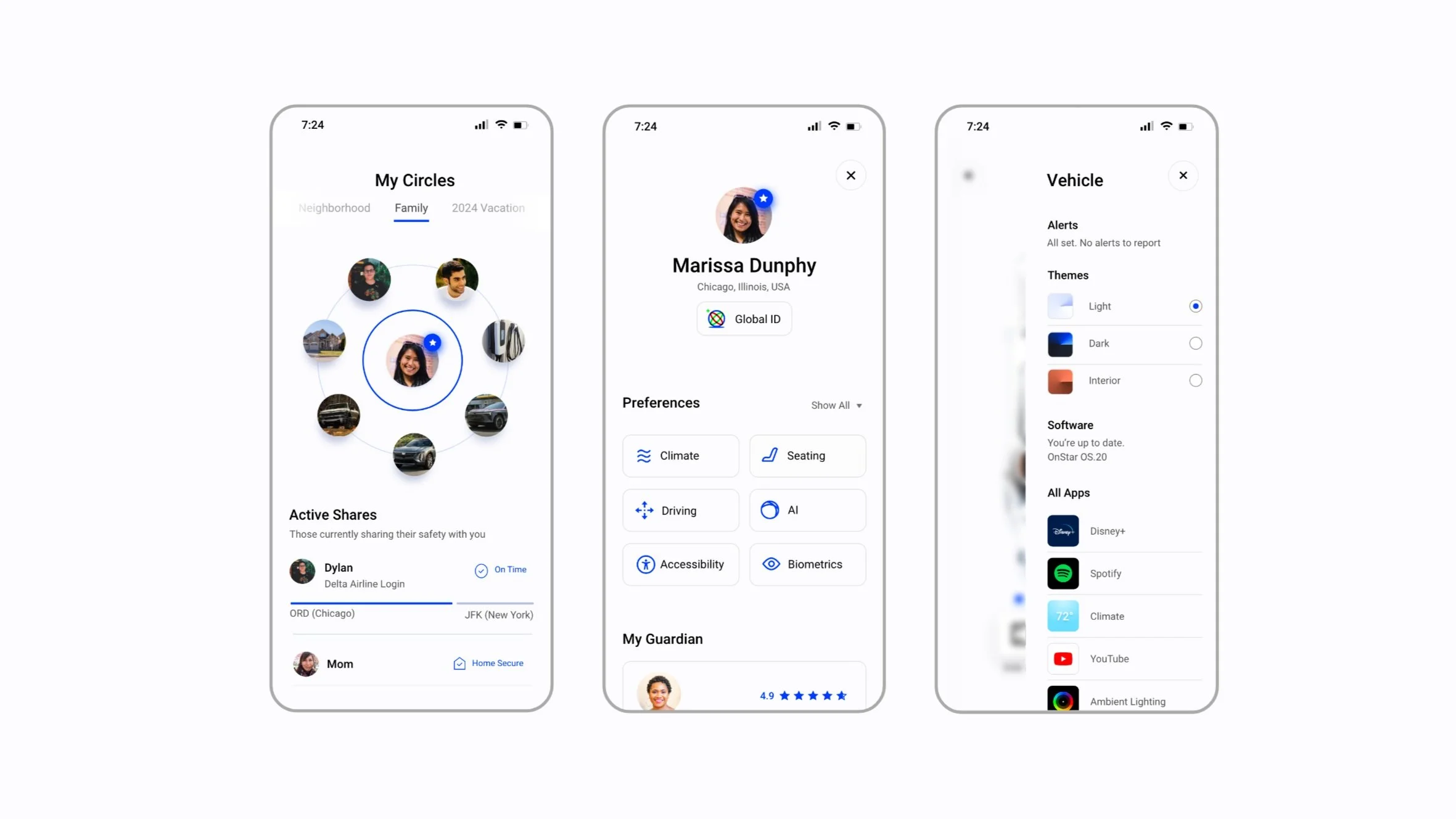
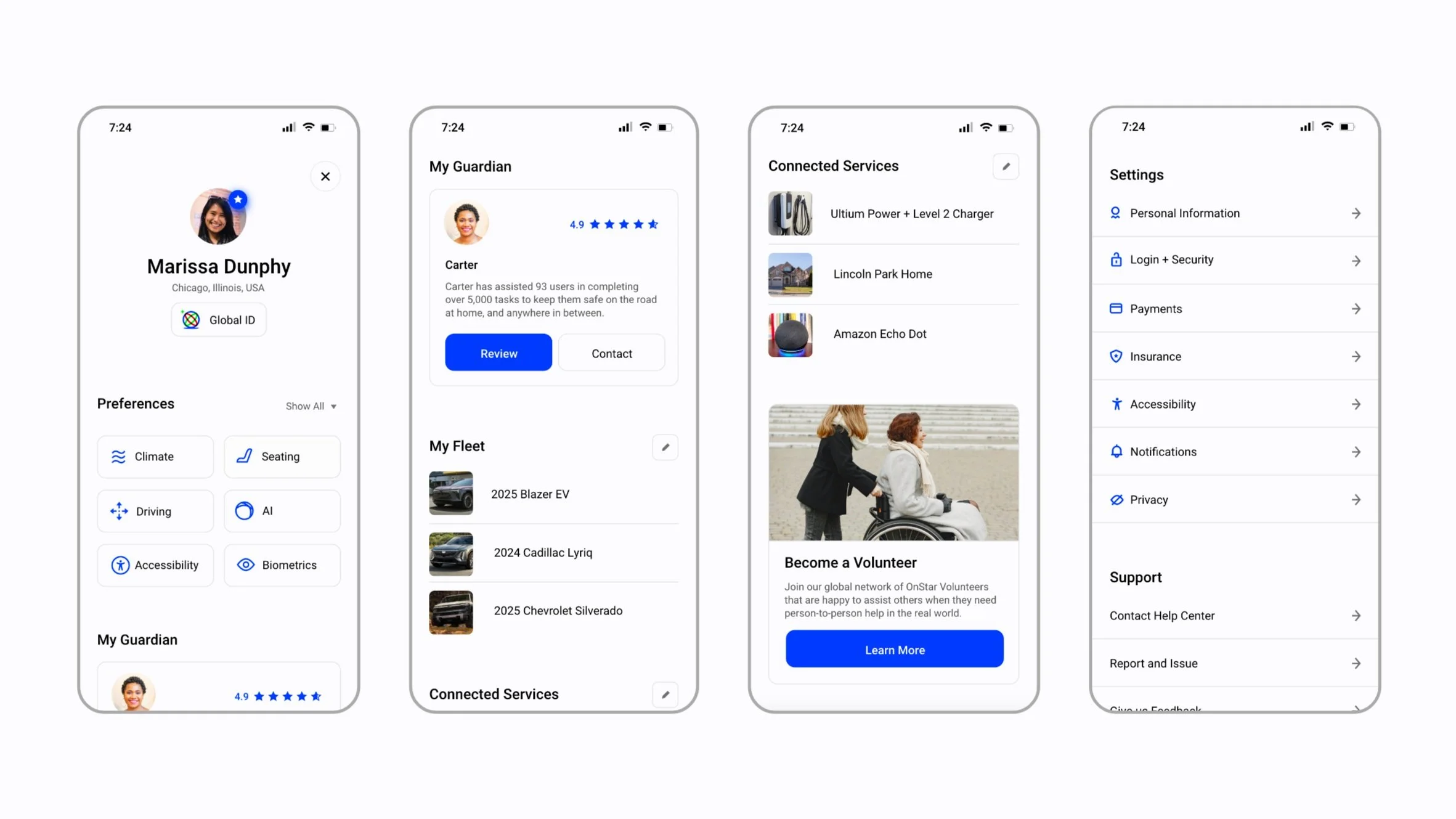
Safety Concepts
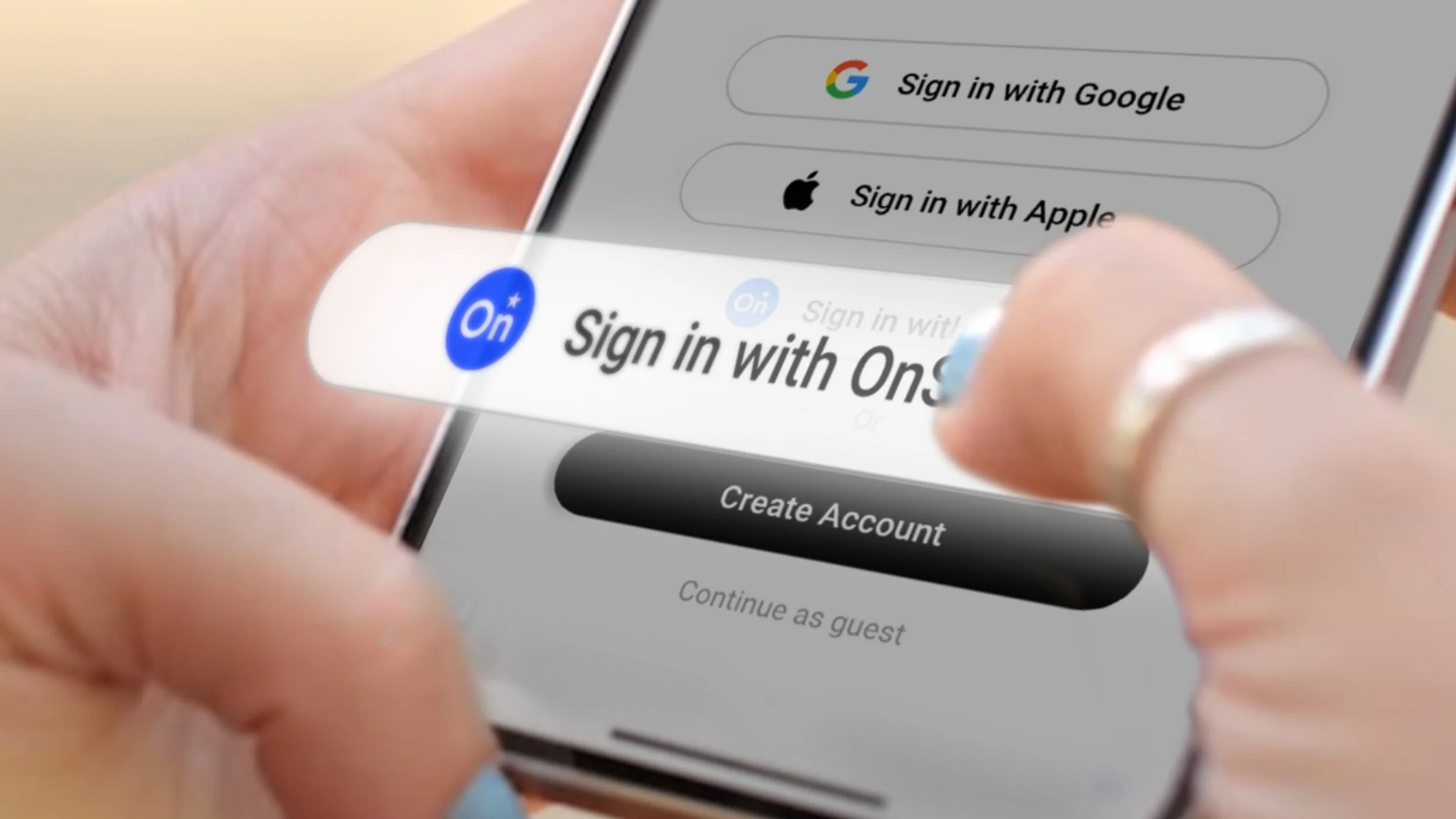
Universal Login
Establishes OnStar as a trusted identity layer across platforms. Instead of creating new accounts or repeating verification steps, users carry their safety credentials into other services, reducing friction while maintaining protection.
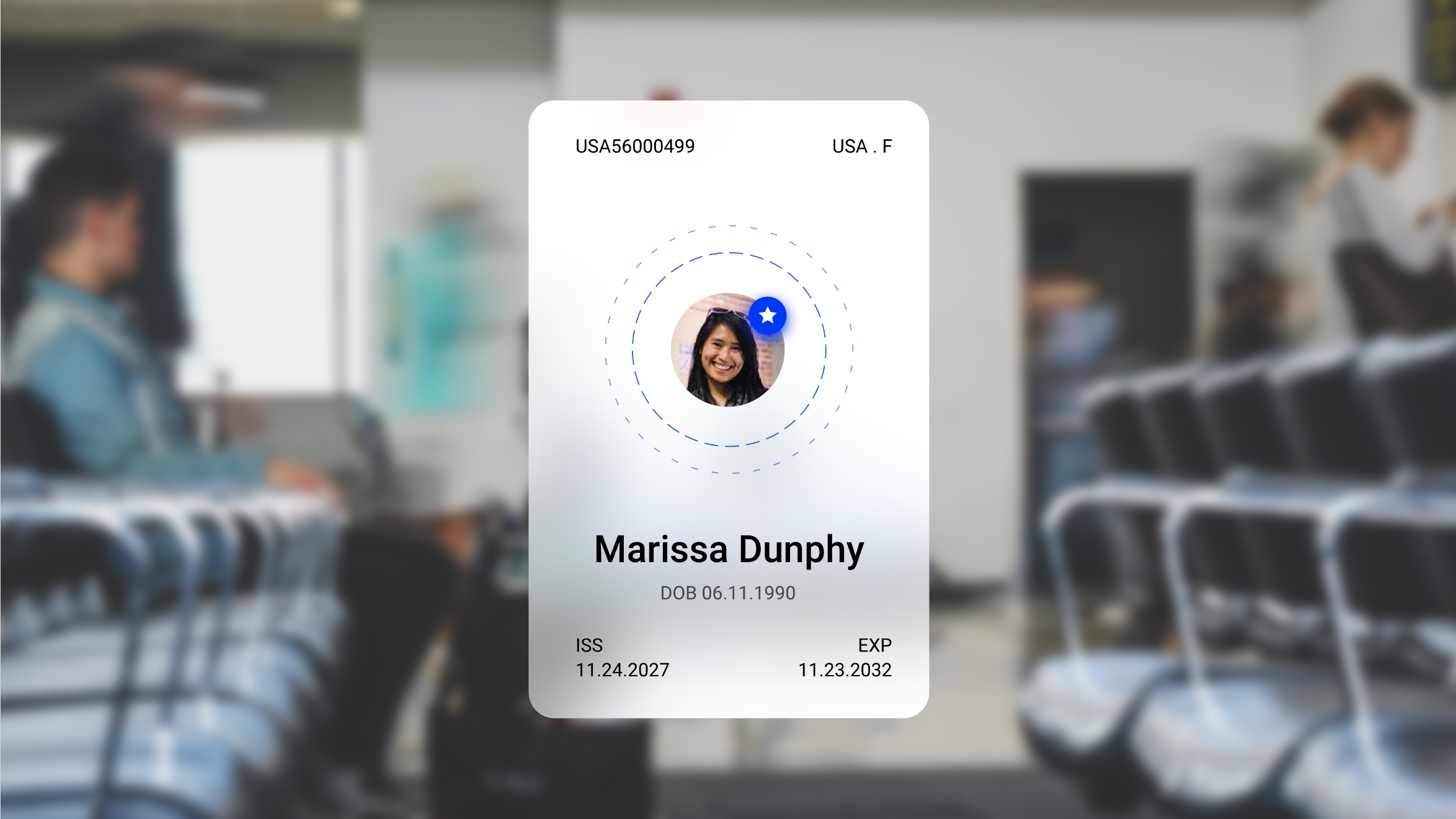
Global ID
A secure, portable identity for both digital and physical environments. From travel checkpoints to mobility services, it simplifies interactions that normally require validation, while reinforcing trust.
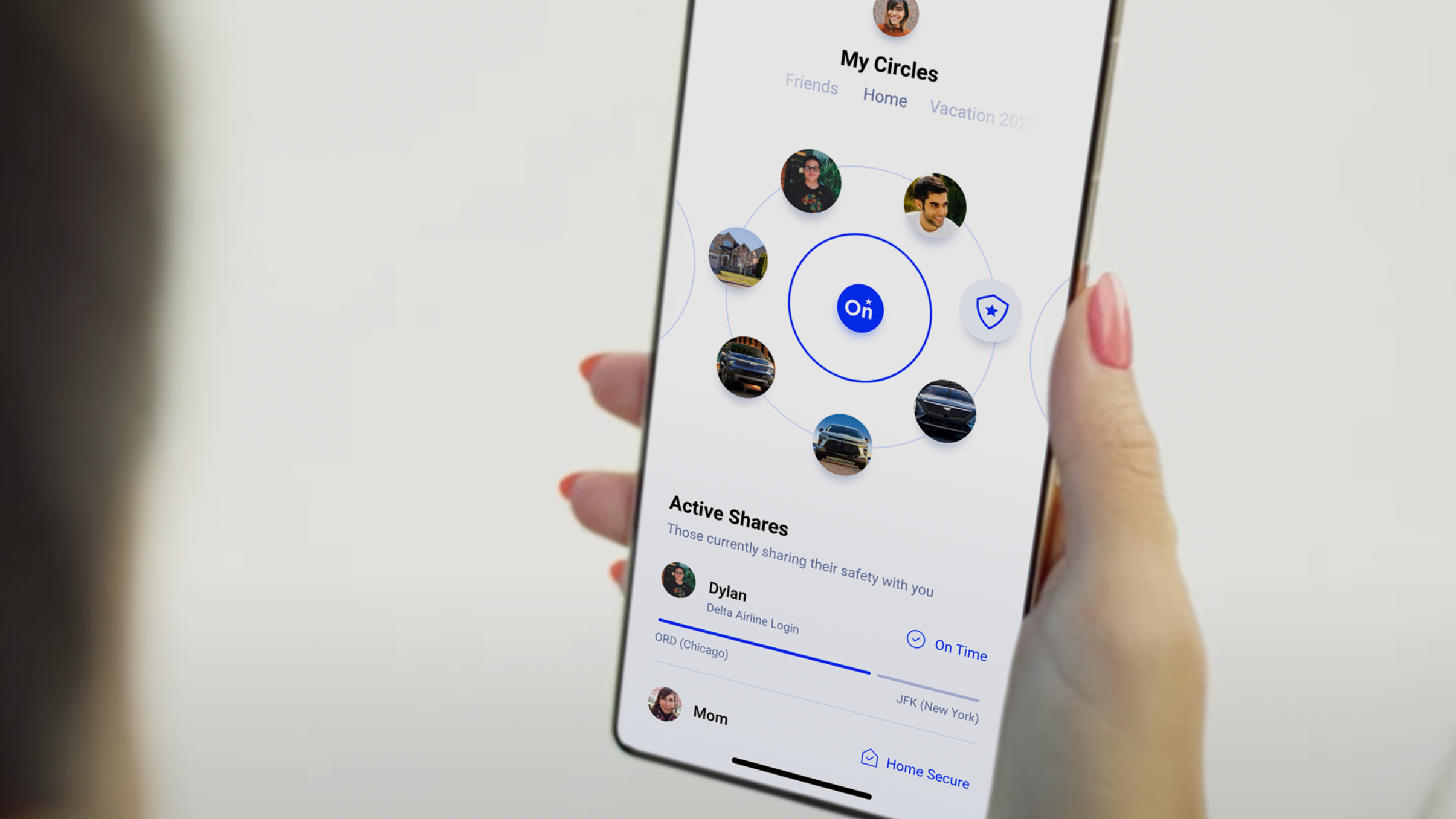
OnStar Circle
Reframes how people stay connected. Rather than manually sharing location, users create contextual groups that reflect real-life situations. This allows a shared sense of awareness without constant interaction, so people feel connected without feeling monitored.
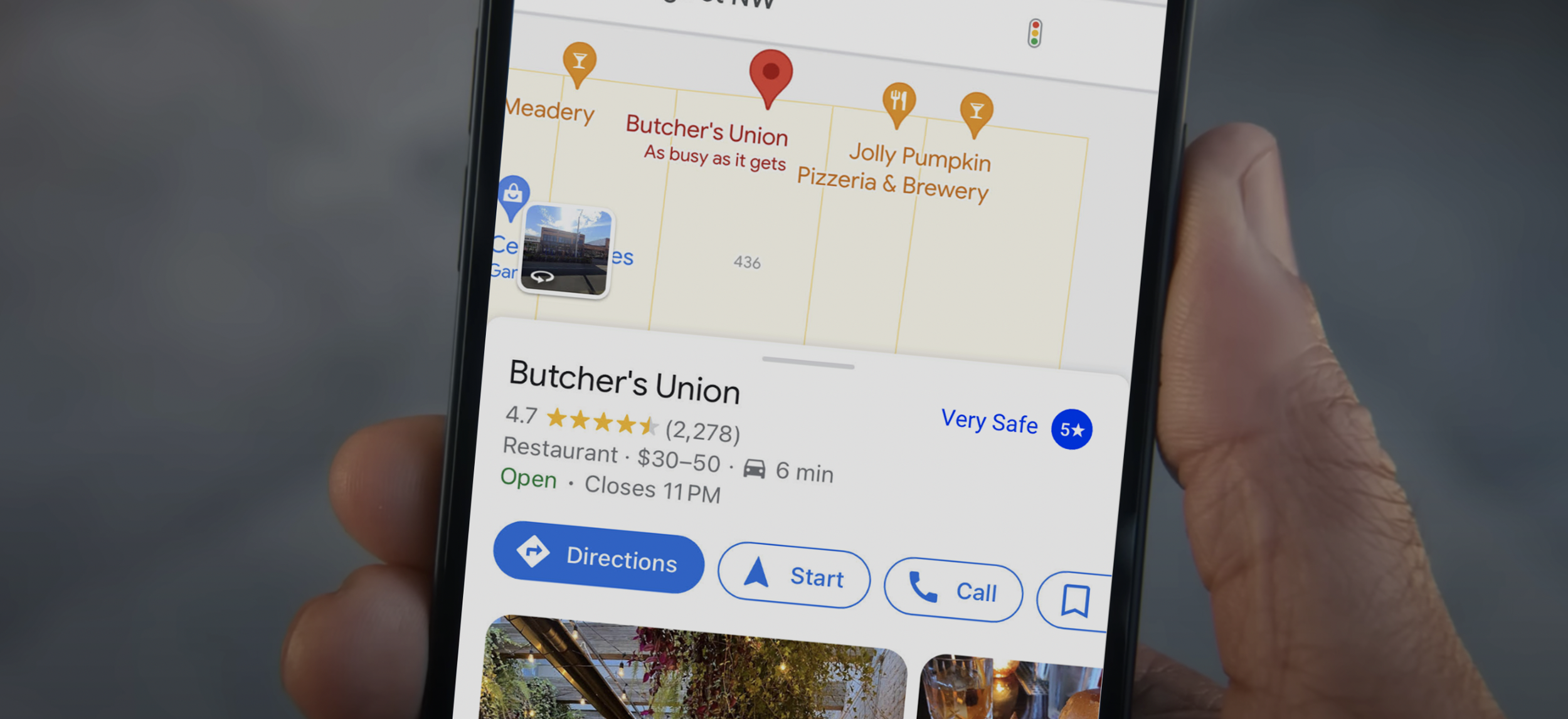
Safety as a Service
A broader layer of environmental awareness. Community-informed signals help users understand the safety of places they visit, with the ability to filter information by what matters most to them.
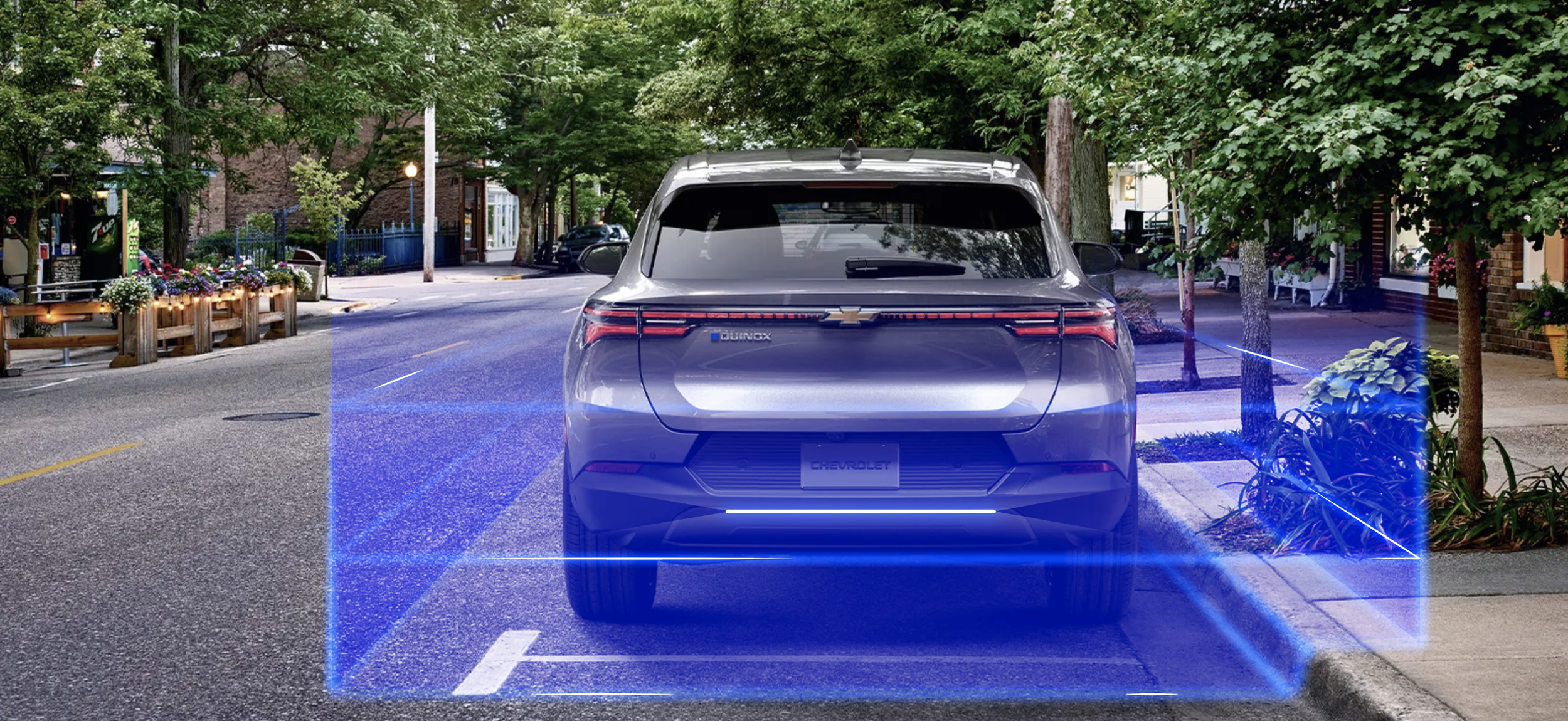
Vehicle Halo
Extends protection into the physical world. The vehicle becomes an active participant in the safety system, capable of detecting threats, preventing unauthorized access, and responding in real time when something feels off.
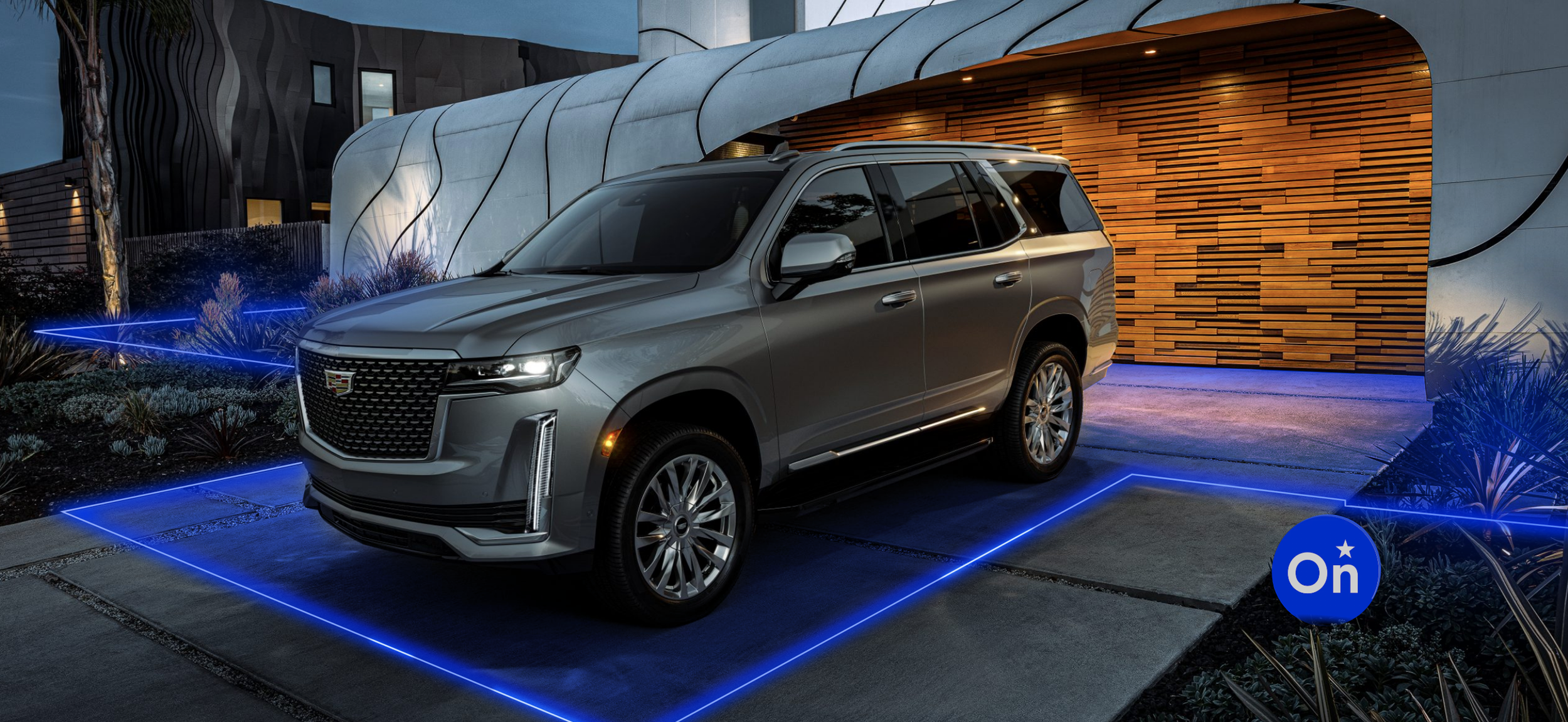
Connected Community
Links homes, vehicles, and neighborhoods. Safety becomes a shared responsibility, so people feel supported even when they are not physically present.
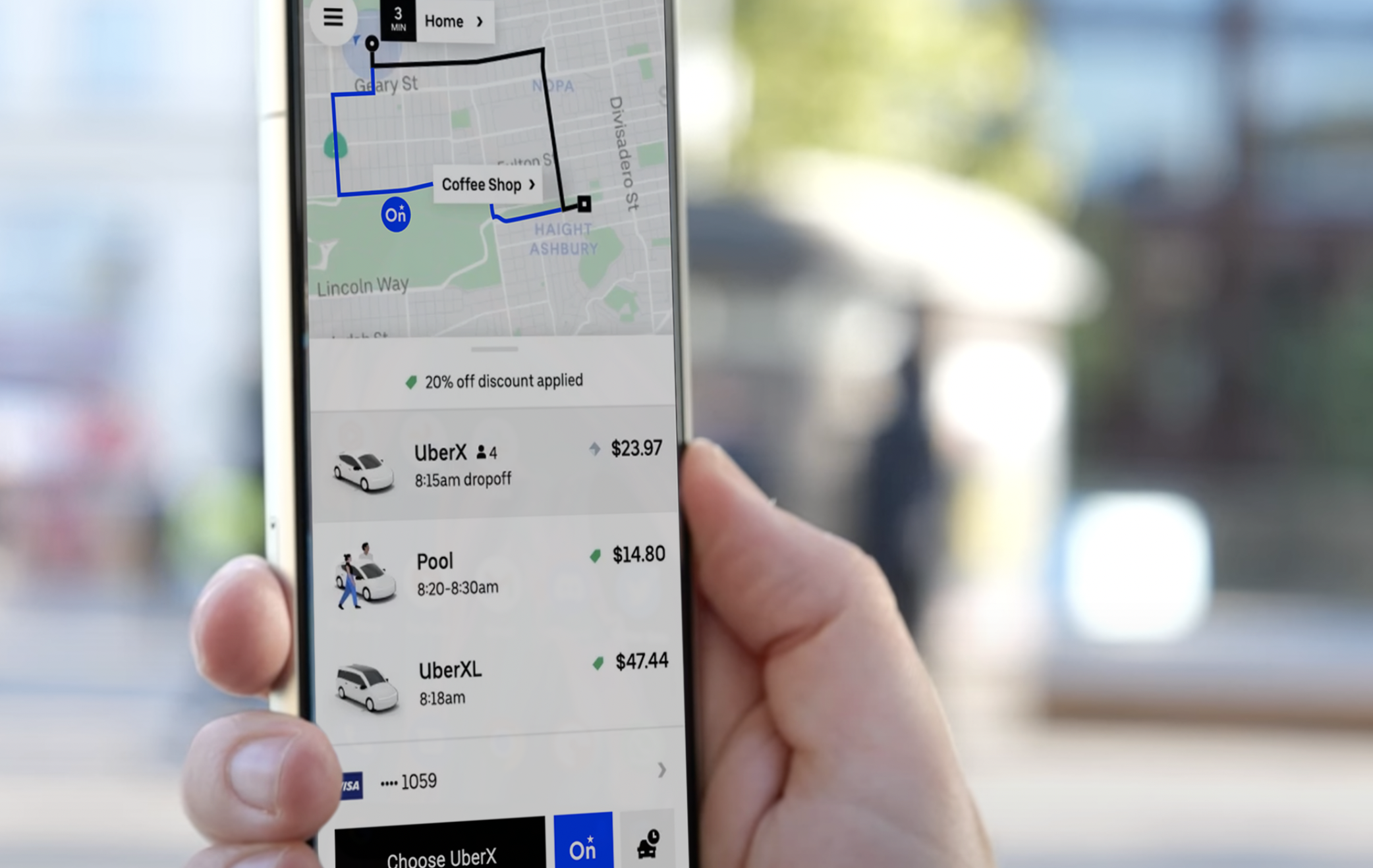
Safe Routes
Helps users navigate with greater confidence by factoring in real-time conditions, environmental risks, and personal preferences. Instead of finding the fastest path, the system prioritizes the safest one.
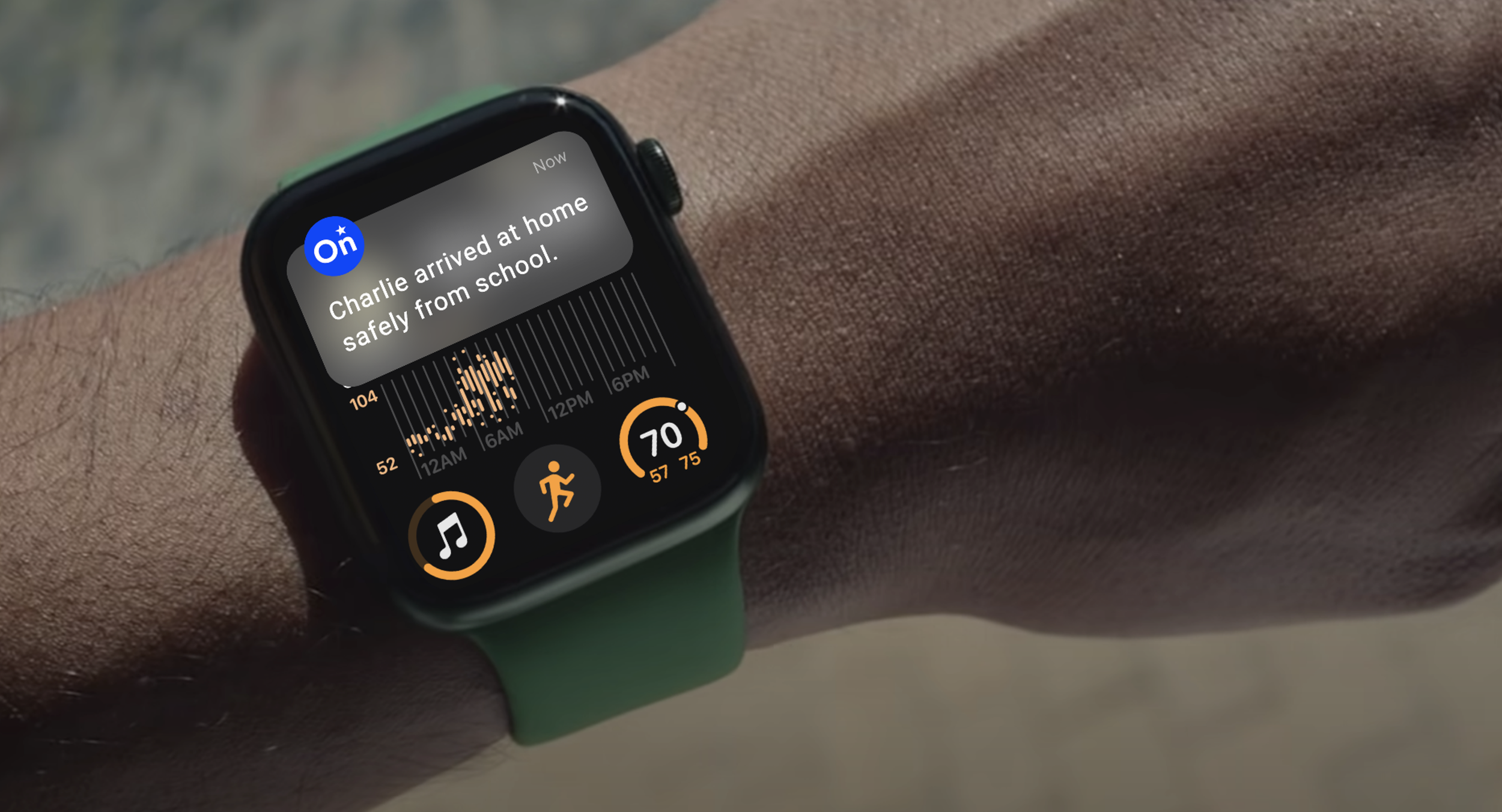
Low-Interaction Notifications
Clarity without noise. Rather than overwhelming users with alerts, the system surfaces key moments and simple signals that keep them informed without demanding constant attention.
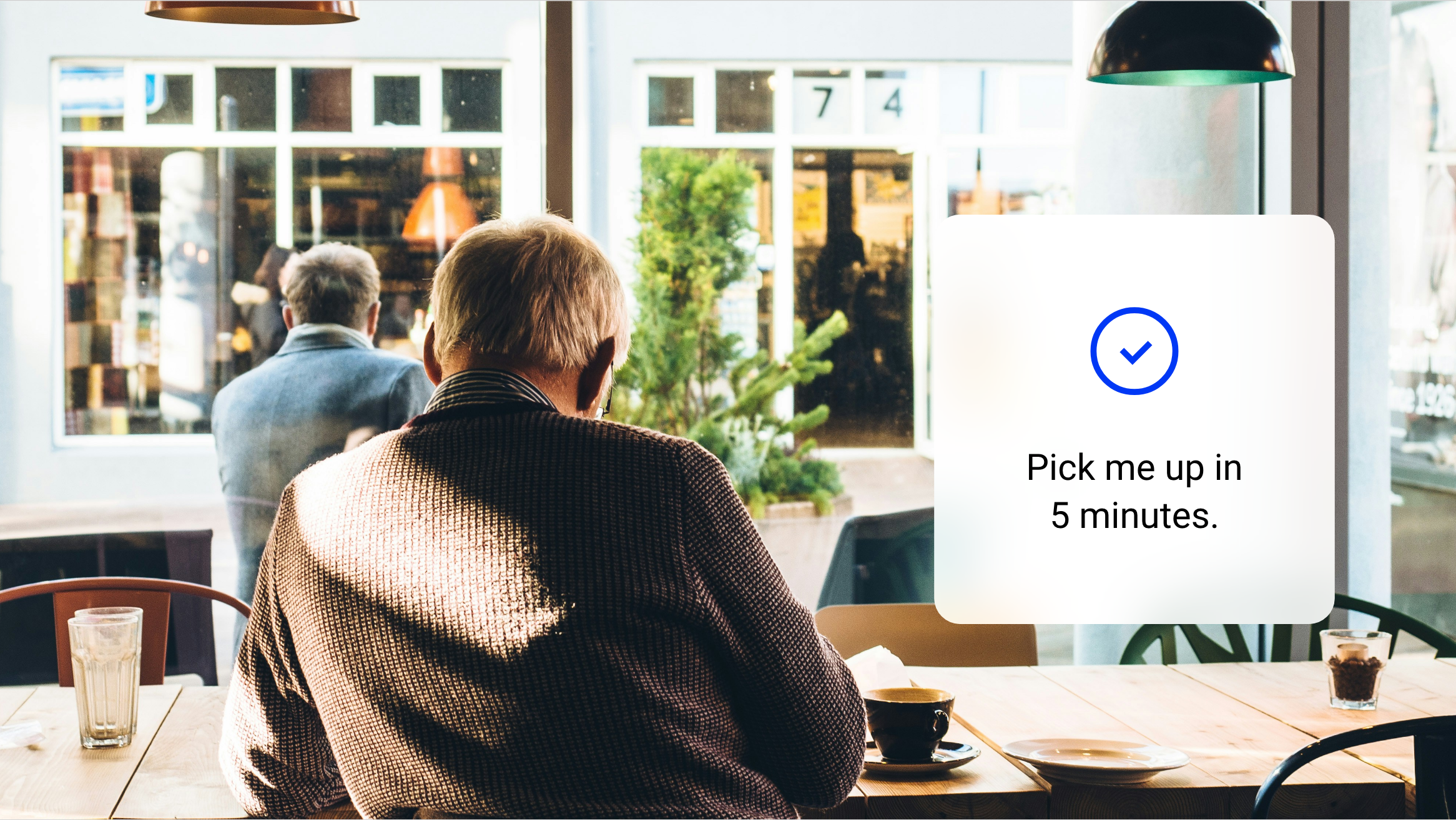
Control Over Autonomy
As systems become more autonomous, the user stays in control of intent. Whether sending a vehicle on an errand or coordinating with others, the system acts safely while keeping the user informed.
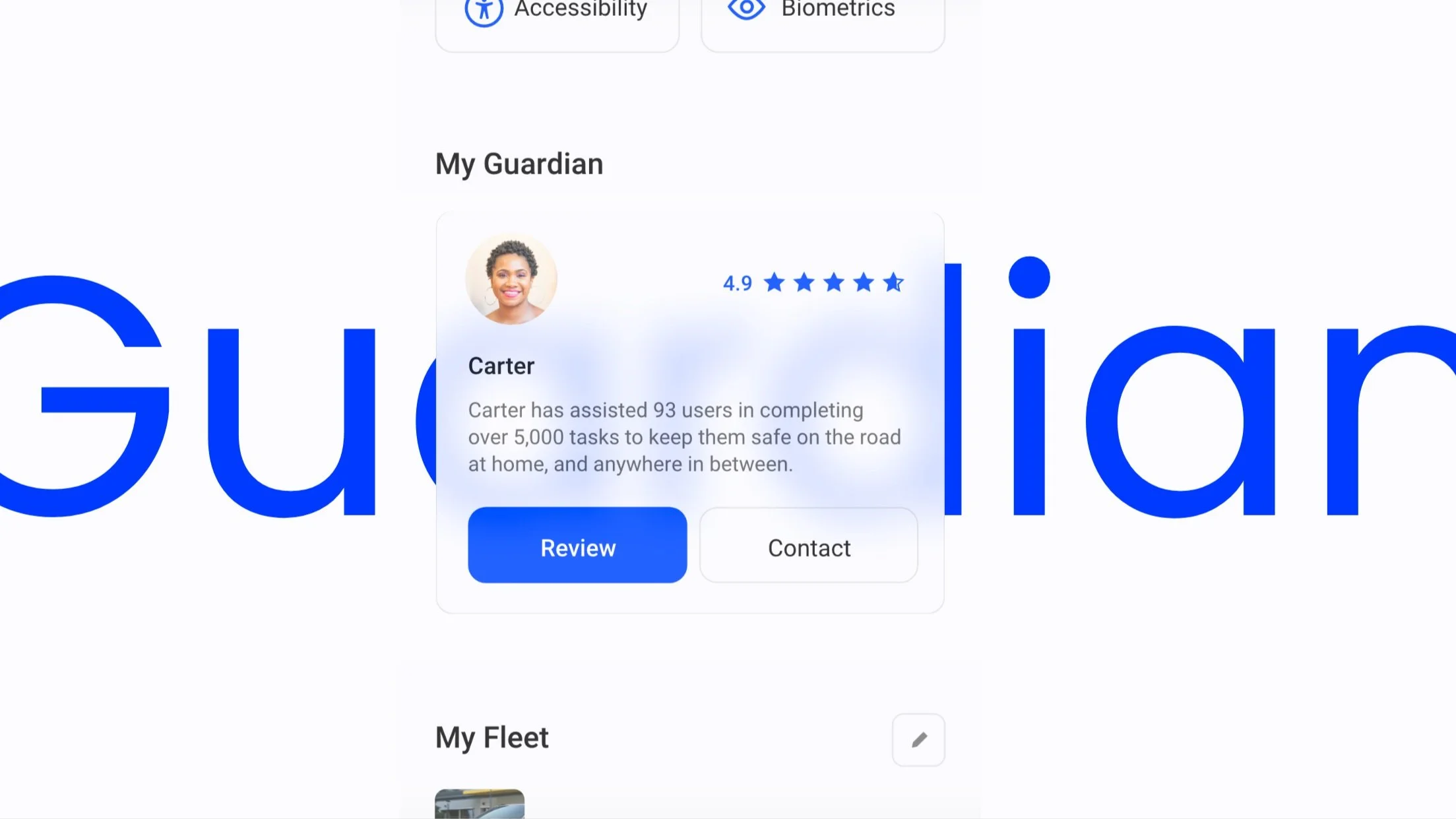
OnStar Guardian
Brings together automation and human support. AI detects patterns and responds at scale, while human advisors provide judgment and intervention when a situation needs a higher level of care.